
Research.
Innovation. Impact.
Advancing the future of healthcare through research, bioengineering, artificial intelligence, and emerging technologies.
Transforming ideas into practical solutions.
At HighBall(HB Labs) Labs, we transform scientific ideas into practical solutions that improve lives. Our multidisciplinary team explores the intersection of public health, bio engineering, artificial intelligence, and digital technologies to develop innovations that address real-world challenges.
Why HighBall Labs?
We believe innovation should solve meaningful problems.
Our work combines scientific rigor with practical technology to create scalable solutions for healthcare, research, business, and society.
Whether through collaborative research, digital health platforms, AI systems, or emerging biomedical technologies, our goal is to accelerate innovation that creates measurable impact.
Our Research Focus
HighBall Labs conducts interdisciplinary research across four major domains.
Public Health & Epidemiology
Generating evidence to improve population health, disease prevention, and health systems.
Artificial Intelligence & Digital Health
Developing intelligent solutions for diagnostics, surveillance, decision support, and healthcare delivery.
Healthcare Innovations and IoTs
Exploring biosensors, medical technologies, environmental monitoring, and next-generation healthcare devices.
Data Science & Health Analytics
Transforming health data into actionable insights through advanced analytics, machine learning, and visualization.
Introducing OriaSense
Real-time Environmental Air-borne System for Early Disease Detection
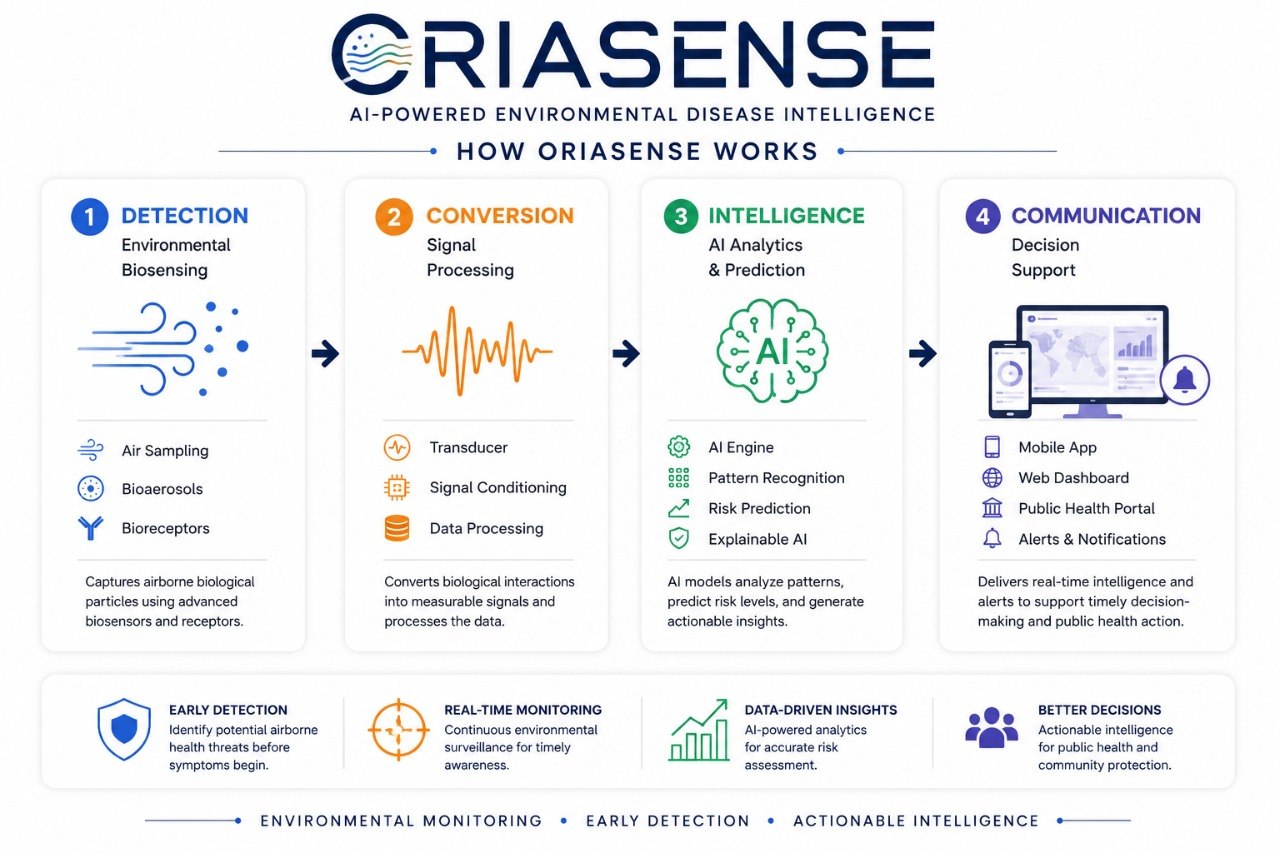
We are building an environmental early-warning system that uses biosensors to detect air-borne infectious risk before symptoms begin.
Imagine identifying potential airborne health threats before they become outbreaks.
OriaSense is our flagship research and innovation initiative focused on developing an AI-enabled environmental biosensing platform capable of monitoring airborne biological particles and providing early risk intelligence to support public health decision-making.
Rather than waiting until people become ill, OriaSense explores new approaches to environmental monitoring, biosensing, artificial intelligence, and digital surveillance to support earlier awareness and response.
Launch System Simulation
Interactive 10-Phase Explainer
Innovation Pipeline
Every innovation at HighBall Labs follows a structured journey.
Research Question
Scientific Investigation
Prototype Development
Validation & Testing
Technology Translation
Real-World Impact
Featured Scientific Publications
Disseminating peer-reviewed, foundational research on epidemiology, public health, and research methodologies to the global scientific community.

BMC Infectious Diseases
Comparative effectiveness of ivermectin versus permethrin for the treatment of scabies: an updated systematic review and meta-analysis
Scabies is a highly contagious parasitic skin disease and a recognised neglected tropical disease with substantial global burden. Permethrin and ivermectin are widely used treatments, yet uncertainty remains regarding their comparative effectiveness.
To systematically evaluate and compare the effectiveness of ivermectin versus permethrin for the treatment of scabies in humans.
Seven randomized controlled trials involving 1,216 participants were analyzed. Compared with permethrin, ivermectin was associated with a lower probability of clinical cure at final follow-up (RR = 0.93, 95% CI 0.86–0.99) and a higher risk of treatment failure (RR = 1.52, 95% CI 1.06–2.20).
Topical permethrin demonstrates a modest but clinically relevant advantage over ivermectin in achieving clinical cure and reducing treatment failure. Ivermectin remains a useful alternative where topical therapy is unsuitable, but optimized dosing regimens are essential.
BMC Medical Research Methodology
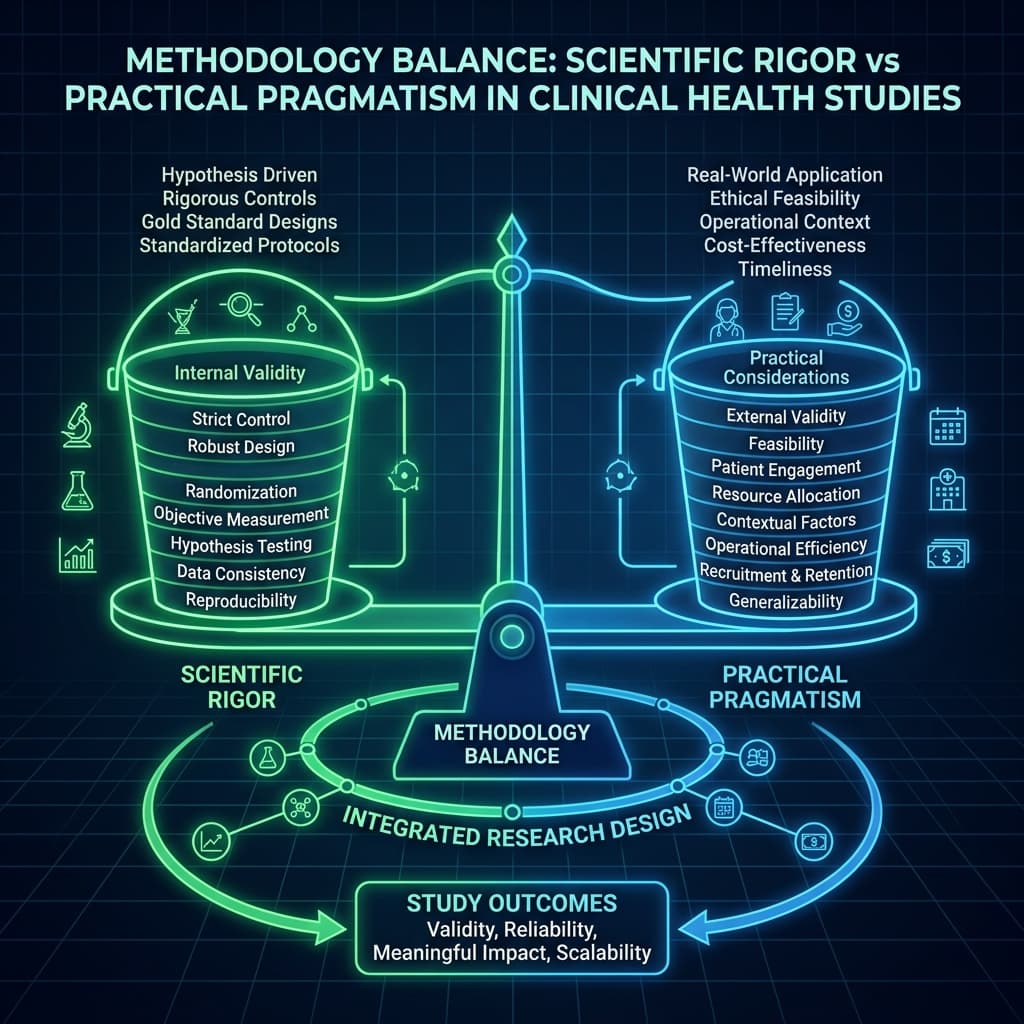
Balancing rigor and pragmatism in health research: a guide to choosing study designs for real-world settings
Health research has traditionally privileged highly controlled study designs to maximise internal validity, yet such approaches often struggle to inform decision-making in complex, real-world settings.
To provide a design-oriented framework for selecting study designs that balance scientific rigor with pragmatic relevance across health systems.
The review demonstrates that study designs occupy positions along a rigor–pragmatism continuum rather than discrete hierarchies. Hybrid, pragmatic, and observational designs enhance relevance and policy utility when rigorously applied.
Balancing rigor and pragmatism through context-sensitive design selection can generate more usable evidence, strengthen policy impact, and improve population health outcomes.

The Laboratory
Designed for Radical Collaboration.
Our Engineering Stack
Collaborate With Us
We're building the future alongside researchers, engineers, clinicians, institutions, startups, and public health organizations.
We welcome opportunities for:
Be among the first to receive updates.
Get periodically notified about publications, project announcements, and new research domains.
Subscribe for Updates
We value your privacy. Unsubscribe at any time.